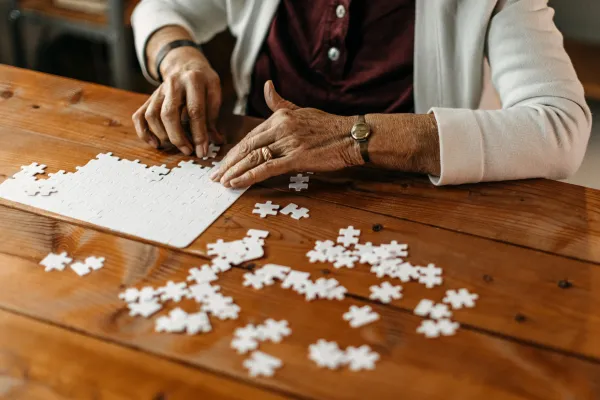
🌸 Savor the Moment: How Puzzling Helps Seniors Practice Mindfulness and Find Peace
“When I’m puzzling, everything slows down. It feels like the only thing that matters is the piece in my hand.”
In today’s fast-paced world, it’s easy for your thoughts to race ahead—worrying about the future or replaying the past. For seniors, these feelings can be magnified by life changes, health concerns, or times of loneliness. It can feel like there’s always something pulling your attention away from the present moment.
But there’s a powerful antidote to this constant mental chatter: mindfulness.
Mindfulness is the practice of bringing your awareness back to right now—with openness, curiosity, and compassion. It helps you savor ordinary moments, ease anxiety, and create more peace within yourself.
The best part? You don’t need complicated training or special tools to get started. One of the gentlest and most accessible ways to practice mindfulness is already in your hands: puzzling.
In this guide, you’ll discover how working on jigsaw puzzles can help you slow down, breathe deeply, and feel grounded—even when life feels uncertain.
💡 What Is Mindfulness?
Mindfulness means paying attention on purpose without judgment. It’s about being fully aware of what you’re experiencing, moment by moment.
When you practice mindfulness, you:
✅ Stay anchored in the here and now
✅ Notice your thoughts and feelings with kindness
✅ Reduce stress and worry
✅ Improve focus and mental clarity
✅ Deepen your appreciation for daily life
According to the National Institute on Aging, mindfulness has been shown to improve sleep, support heart health, and ease symptoms of depression and anxiety in older adults.
Mindfulness doesn’t require emptying your mind of all thoughts—it simply means noticing them and returning your attention to the present again and again.
🧩 Why Puzzling Is a Natural Mindfulness Practice
Puzzling is uniquely suited to mindfulness because it invites you to gently engage all your senses and your focus without demanding perfection.
Here’s why puzzling feels so calming:
✅ Focus: You direct your attention to each shape, color, and pattern.
✅ Flow: Time slips away when you’re fully absorbed.
✅ Gentle repetition: Sorting, selecting, and placing pieces creates a steady rhythm.
✅ Non-judgment: There’s no winning or losing—only curiosity and discovery.
Every time you sit down to puzzle, you practice returning your attention to a single, peaceful task.
❤️ Emotional Benefits of Mindful Puzzling
When you puzzle with mindfulness, you may notice:
✅ Less tension in your body and fewer racing thoughts
✅ More ease and clarity in your mind
✅ A deeper sense of contentment and calm
✅ More self-compassion when you make mistakes
Piece by piece, you create a sanctuary of peace in your day—a place where nothing else matters but this moment.
🧘♀️ How to Turn Puzzling Into a Mindful Ritual
Here’s how to create a puzzle practice that nurtures calm, clarity, and gratitude:
1. Set the Scene
Choose a space that feels quiet, uncluttered, and welcoming:
✅ A clean table with no distractions
✅ Soft, warm lighting—avoid harsh overhead lights
✅ A comfortable chair with good back support
✅ Gentle background music or nature sounds, if you like
Creating a special environment helps signal to your brain that it’s time to slow down.
2. Select Calming Images
Choose puzzles that feel soothing and inviting:
✅ Landscapes—gardens, forests, or beaches
✅ Simple patterns in soft colors
✅ Nostalgic or comforting images that make you smile
The right image can set the tone for a peaceful session.
3. Begin With Intention
Before you place your first piece, pause and reflect:
“I am here to be present.”
“I will approach this time with curiosity and patience.”
“I will be kind to myself.”
This small step can change your entire experience.
4. Focus on Sensory Details
As you puzzle, bring your awareness to:
✅ The feel of each piece in your hand
✅ The colors and shapes you see
✅ The soft click as a piece fits into place
Whenever your mind drifts, gently guide it back to what you’re touching, seeing, and hearing.
5. Return to Your Breath
When you notice your thoughts spinning off into worries or distractions, come back to your breath:
✅ Inhale slowly through your nose.
✅ Exhale fully through your mouth.
✅ Notice how your body feels with each breath.
Your breath can be an anchor to help you feel steady and calm.
6. End With Gratitude
When you finish, take a moment to reflect:
✅ What did you enjoy about this session?
✅ How does your body feel now?
✅ What are you grateful for in this moment?
Even a few minutes of reflection can deepen the benefits of your practice.
🌿 The Science of Mindfulness and Health
Research shows that mindfulness offers measurable health benefits:
✅ Lower cortisol, reducing inflammation and stress
✅ Improved focus, memory, and decision-making
✅ Better sleep quality and energy
✅ Greater emotional resilience
According to the Journal of Geriatric Psychiatry, seniors who practice mindfulness regularly report higher life satisfaction and more vitality.
Mindfulness doesn’t need to be a formal meditation—it can be as simple as sitting quietly with your puzzle and breathing.
💬 Real Stories of Finding Peace Through Puzzling
“Puzzling has become my meditation. It’s the quietest, calmest part of my day.” – Ruth, 72
“I feel more centered and less overwhelmed when I take time to puzzle.” – George, 69
“When I puzzle mindfully, I’m able to let go of worries and feel present.” – Evelyn, 74
Their stories prove that peace is possible, even in small, ordinary moments.
🧺 How Puzzle Prep Pro Supports Mindful Habits
A tidy, organized space makes it easier to be present. Puzzle Prep Pro helps you:
✅ Sort pieces by color and shape, so you can focus right away
✅ Store puzzles neatly between sessions, reducing clutter
✅ Prevent lost or mixed-up pieces that create frustration
✅ Start each session with everything ready to go
When your puzzle area feels inviting and orderly, you’re more likely to return to it again and again.
🕰️ A Sample Mindful Puzzling Routine
Try this simple weekly plan to build your practice:
Monday: Choose a calming puzzle and set your intention.
Tuesday: Spend 20 minutes noticing details of shapes and colors.
Wednesday: Reflect in a journal about your experience.
Thursday: Puzzle while practicing slow, steady breathing.
Friday: Celebrate your progress—every piece is an accomplishment.
Saturday: Invite a loved one to join you for quiet companionship.
Sunday: Rest or plan your next mindful session.
🌟 Tips for Staying Present
✅ Be patient. Mindfulness is a practice, not a destination.
✅ Keep it simple. Even 5–10 minutes of focus makes a difference.
✅ Be gentle. When your mind wanders, return without judgment.
✅ Honor your progress. Every session is a success, no matter how many pieces you place.
🎯 Beyond the Table: Other Mindfulness Practices
Puzzling pairs beautifully with other simple mindfulness habits:
✅ Short walks in nature—notice the sights, sounds, and smells
✅ Gentle stretching or yoga—focus on how your body feels
✅ Breathing exercises to center your mind
✅ Gratitude journaling at the end of the day
These practices work together to create a balanced routine that supports your body, mind, and spirit.
🧠 The Ripple Effect of Mindful Living
As you build mindfulness through puzzling, you’ll likely notice:
✅ More patience with yourself and others
✅ Less reactivity to stress and frustration
✅ A deeper appreciation for ordinary moments
✅ A sense of calm that lingers beyond the table
Piece by piece, you’re creating a life that feels peaceful, grounded, and filled with quiet joy.
📥 Ready to Create Your Mindful Puzzle Space?
Puzzle Prep Pro makes it simple to build an inviting, organized environment where mindfulness can flourish.
👉 Join the Puzzle Prep Pro waitlist here
Sign up today for early access, exclusive offers, and free guides to help you get started.
Mindfulness isn’t about emptying your mind—it’s about filling it with gentle awareness and gratitude for each moment.
With puzzling, you can create a sanctuary of calm in your day, no matter what life brings.
Every piece you place is an invitation to breathe, slow down, and be here now.
Be present. Your next peaceful moment is waiting.

